

Tennis court construction in Arizona
Backyard, club and resort courts.
Projects from $12,500
Final price depends on size, condition, repairs, coating, striping and access.
- ✓AZ ROC 324026KA Dual Engineering
- ✓Licensed since 2019
- ✓Nearly 1,000 projects
- ✓Family owned


Get a call back
Why the license matters
ROC 324026 is a KA Dual Engineering license. It is one license that covers commercial and residential work, grading and concrete included. Court lighting is on the same contract.
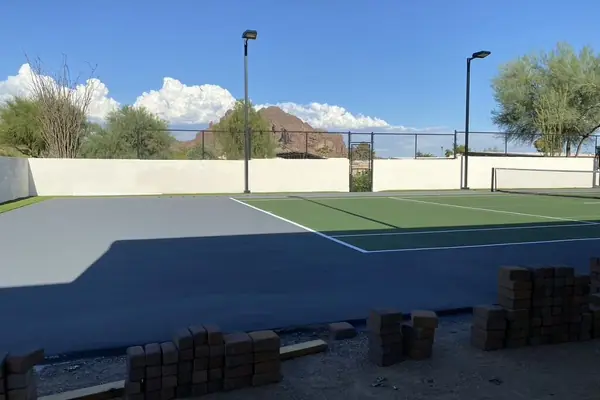
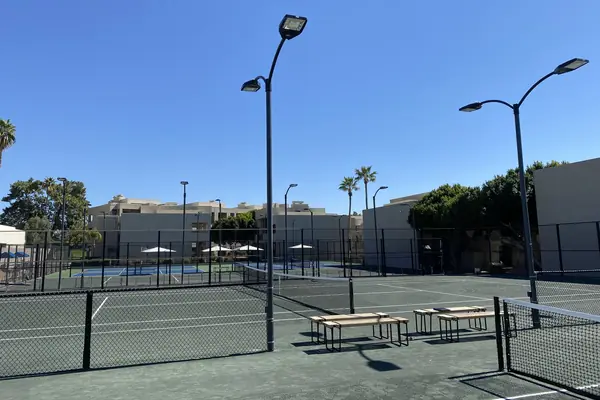
Recent courts
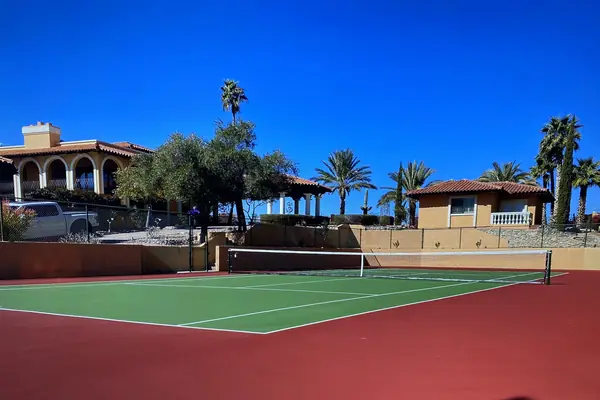
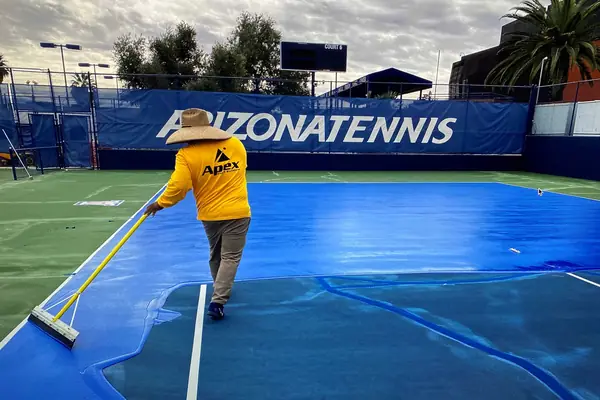
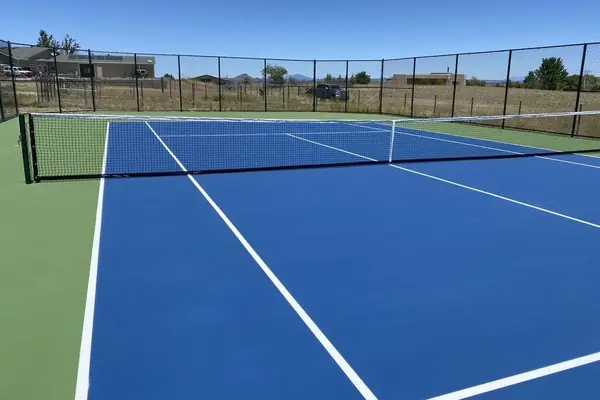
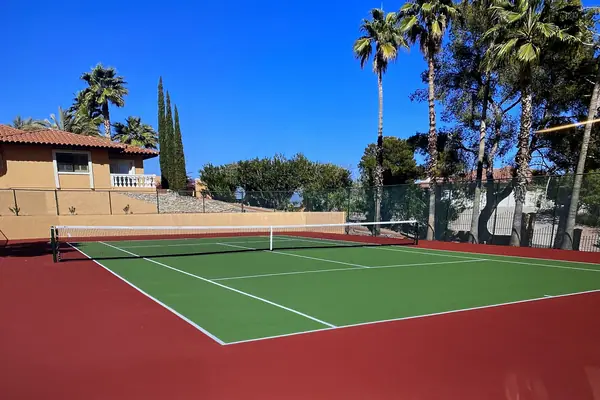
What a build includes
- ✓
Grading and concrete slab
The pad is graded to one plane with a slight fall for drainage, and the slab is poured and cured before any color goes on. Post-tensioned concrete is available as an option.
- ✓
Court surface
Acrylic hard court in your colors, with regulation lines. Cushioned systems and clay are available as options, and pickleball lines can be added in a second color on request.
- ✓
Fencing
Ten feet is the usual height, stepping lower along the sides at the service lines. Aluminum, galvanized or vinyl-coated chain link.
- ✓
Windscreens
Mesh screens on the fence line to cut the wind and give the ball a plain backdrop.
- ✓
Court lighting
On the same contract, with fixtures placed for even light across the court.
- ✓
Nets and posts
Permanent posts, center strap and a regulation net, installed.
Resurfacing and conversion starting prices
These are 2026 starting prices for work on a court that already exists. A new tennis court is quoted by project after a free on-site visit.
- From $12,500
Tennis court resurfacing
60 by 120 feet, 7,200 square feet - From $14,500
Tennis to pickleball conversion
Full tennis footprint
Final pricing depends on court size, existing surface condition, crack repair, drainage and low spots, coating system, colors, striping and site access.
How it goes
Site visit and measurements
We come out, measure the space, check slope, drainage and access for a full-size court, and talk through what you want.
Design and quote
You get a layout with court size, colors, fence and line plan, and a written quote for the full build.
Build
Grading, slab, surfacing, fence, and lights, run by one contractor on one contract.
Play
We walk the finished court with you, hang the net, and hand it over.
Built for Arizona sun
A Phoenix tennis court spends most of the year in direct sun, and in summer the surface runs far hotter than the air. The court is built on one plane with a slight fall for drainage, about 1 inch in 10 feet, so monsoon rain runs off instead of standing on the surface. The acrylic color coats are chosen for UV, so the court holds its color, and lighting extends play into the evening once the heat drops.
Questions
How much space does a tennis court need?
The playing lines are 78 by 36 feet for doubles. A regulation court with run-off room behind the baselines and along the sides is about 120 by 60 feet. Smaller practice layouts are possible where the lot is tight. We measure on the site visit and show you what fits.
How does drainage work on a flat court?
The court is built on one plane with a slight fall across it, about 1 inch in 10 feet. Water runs off the surface in one direction instead of collecting, and the pad around the court is graded so it drains away.
How tall is the fence?
Ten feet is the usual height behind the baselines, and it can step lower along the sides at the service lines. Aluminum, galvanized or vinyl-coated chain link are the options, with windscreens if you want them.
Which surface should I pick?
An acrylic hard court in your colors is the usual choice in Phoenix. Cushioned systems and clay are available as options, and we go over the differences on the site visit.
Can I add pickleball lines?
Yes. Pickleball lines go on in a second color so both games read clearly. If you want pickleball only, a tennis footprint converts to up to four pickleball courts.
Where do you work?
All of Arizona. We are headquartered in Phoenix and build across the state, from Tucson and Yuma to Prescott and Flagstaff. Tell us where the court is going and we confirm on the first call.