Court Builder in Glendale, AZ
Apex Courts Arizona LLC, ROC 324026, class KA Dual Engineering, licensed since 2019, 800+ courts built across Arizona, family owned in Phoenix, ASBA member, BBB Accredited.
Apex Court Builders is a Phoenix family business that builds and resurfaces pickleball, tennis, basketball, bocce and multi-sport courts in Glendale for homeowners, HOAs and clubs. Apex works under Arizona ROC 324026, one license that covers commercial and residential work, grading and concrete included, and court lighting is on the same contract.
Call (480) 264-6889, Monday to Friday 7:00 AM to 5:00 PM Arizona time, or request a free estimate.
Court lights under the zoning code
Section 35.4.404 of Glendale’s Unified Development Code sets a rule for court lights in every residential district. The lights mount no higher than 15 feet, are shielded and meet the house’s setbacks, which in the R1-6, R1-7 and R1-8 districts keep them 20 feet off the rear lot line, or 15 feet on an R1-6 parcel approved before June 22, 1993. Light reaching a residential property line may not exceed 0.5 foot-candles.
After 11 PM, no recreational facility, public or private, may stay lit by fixtures that fall short of these rules, except to finish an event under way. A permit that includes outdoor lighting must show the City Engineer fixture locations, catalog cuts and photometric data.
Fence height, lot coverage and permits
Ordinance O25-51 exempts fences from a building permit only up to 7 feet, so a 10-foot court fence needs one. Zoning is less settled. The development code caps side and rear fences at 6 feet, but it also treats a fence as an accessory structure, which keeps 3 feet from side and rear lot lines up to 7 feet tall and 2 feet more for each added foot. Read that way, a 10-foot court fence sits 9 feet in, or at the house setback if less. Where the two rules conflict, the more restrictive one controls.
Accessory structures count toward lot coverage, capped at 40 percent in the R1-6, R1-7, R1-8 and R1-10 districts. Ask the Planner of the Day, (623) 930-2800, which rule governs a court fence and how coverage is counted, and get the answer in writing before a quote names a height.
County islands are unincorporated Maricopa County land, where the county’s ordinance keeps a private court 20 feet from neighboring land under other ownership and lets its fences reach 14 feet. The county also requires a zoning clearance for any fence over 6 feet.
Grading, drainage and clay soil
A city grading plan and permit are required once work moves 50 cubic yards of earth or more, a layer about 2 and a quarter inches deep across a full 60 by 120 foot tennis pad. The code also forbids a fence, berm, curb or fill that changes how storm water sheets across a lot and increases the flow, unless the city engineer approves it.
At 7 of 18 points spaced about 2 miles apart across the city, the USDA soil survey maps a clay loam that NRCS rates somewhat limited for homes without basements because it shrinks and swells, most often Mohall clay loam, and the Arizona Geological Survey links such clay to heaved and cracked slabs. About 26 to 42 inches down, Mohall is 23 percent calcium carbonate, the mineral that cements caliche, and fence post and light pole holes can reach that layer. Glendale requires a soils test and geotechnical report for new buildings, and Building Safety can say whether that covers a court slab.
Coating through the West Valley heat
NOAA’s normals for Youngtown, the nearest West Valley station, count 115 days a year at 100°F or more, four more than Phoenix Sky Harbor, and 3.9 days with a low at freezing or below. One acrylic coating maker allows application only when air and surface are at 50°F and rising, never on a surface over 140°F and never with rain coming. Another needs 50°F during application and for 24 hours after.
From November through March the normal low is under 50°F, so the 24-hour product fits April to October. A sunlit court surface heats well past the air temperature, so from June to September the surface cap favors coats at first light. Courts here can be coated in any month.
Courts Apex builds
Pickleball courts
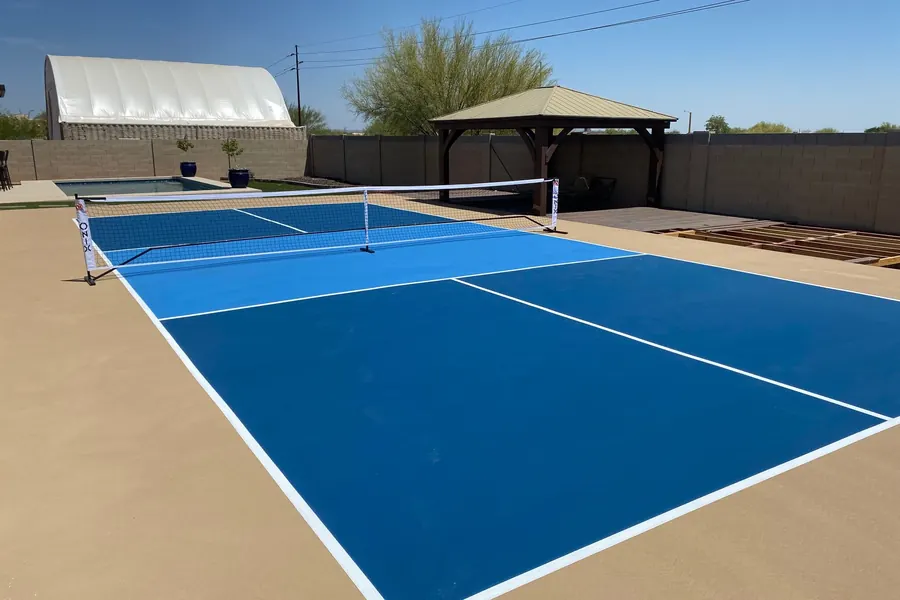
USA Pickleball sets the pad at 30 by 60 feet at least and 34 by 64 for new construction, and each court Apex builds is a concrete slab finished in acrylic color coats with a net on permanent posts. See pickleball courts.
Tennis courts
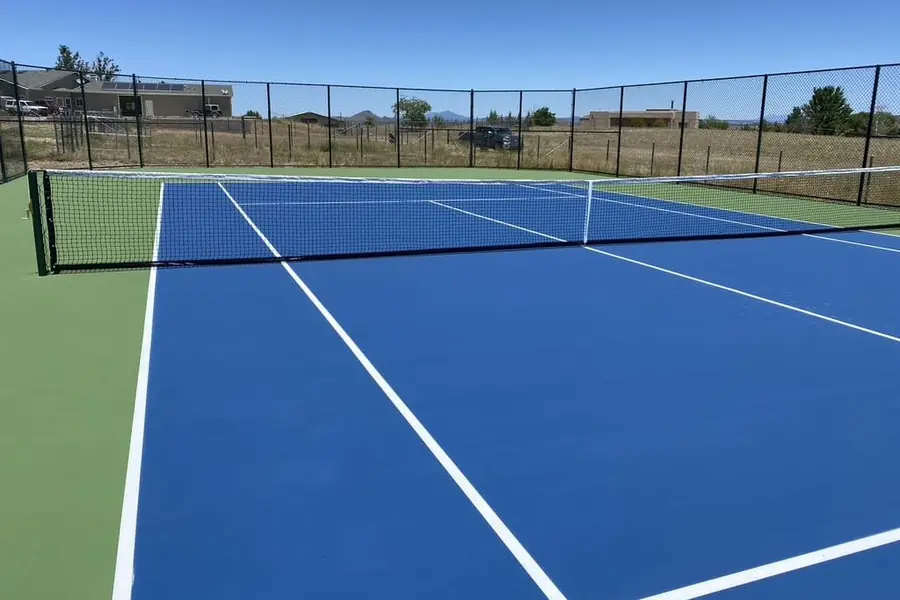
A full tennis court, about 60 by 120 feet with run-off, can carry pickleball lines in a second color. See tennis courts.
Basketball and multi-sport courts
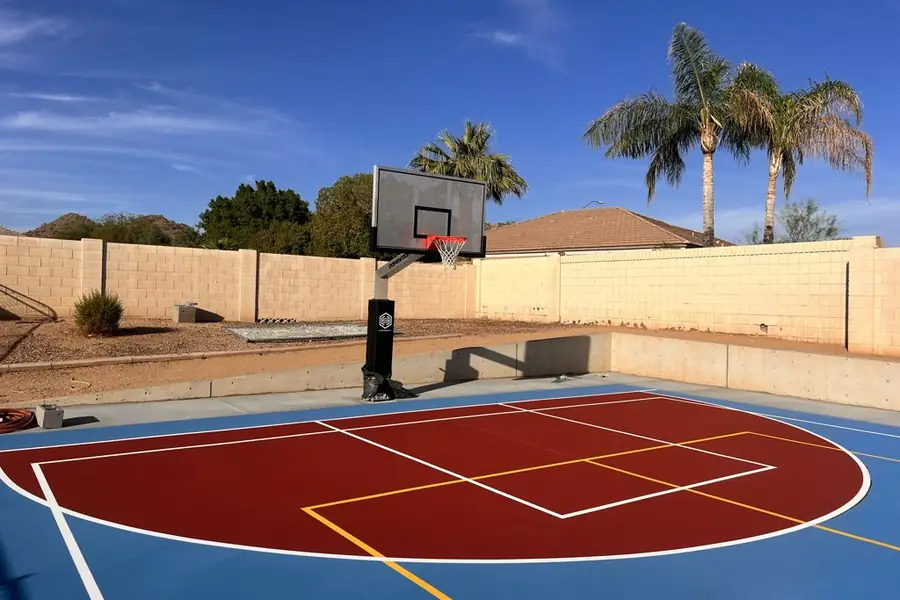
For basketball, Apex builds full courts and half courts. A multi-sport court puts two or more games, such as basketball and pickleball, on one slab with lines for each. See basketball courts and multi-sport courts.
Bocce courts
Apex builds new bocce courts and renovates or rebuilds worn ones, priced after a site visit. See bocce courts and padel courts.
Court resurfacing in Glendale
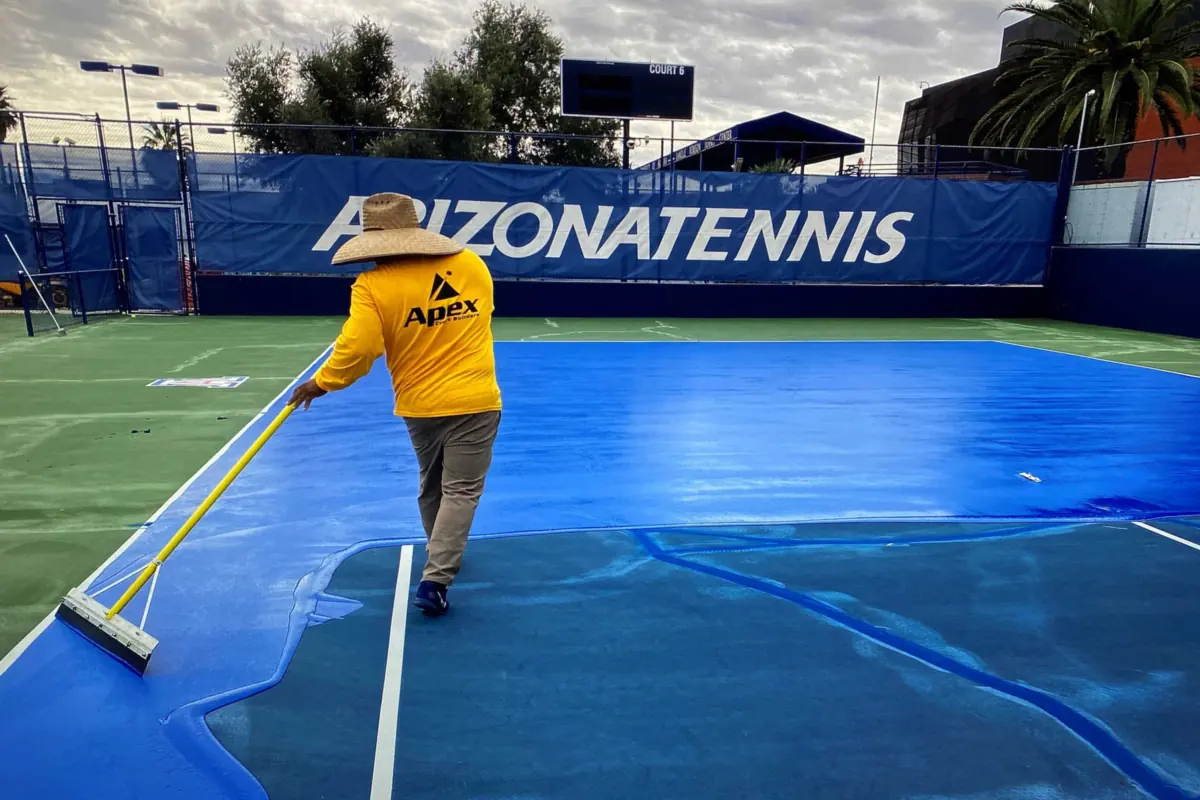
Resurfacing starts with a clean court, then crack repair and leveling, an acrylic resurfacer, the color coats and finally the lines. With 115 days a year at 100°F or more, UV and heat age acrylic sooner than a milder climate would, fading color and opening cracks earlier. One sound tennis court can become up to four pickleball courts with no new slab. See court resurfacing and repairs.
| Services | Court construction, court resurfacing and tennis to pickleball conversions |
|---|---|
| Areas served | Glendale. Other cities are on the service area page. |
| Based in | 705 E. Granada Road, Phoenix, AZ 85006 |
| Hours | Monday to Friday, 7:00 AM to 5:00 PM Arizona time |
| Phone | (480) 264-6889 |
| License | Arizona ROC 324026, class KA Dual Engineering, held by Apex Courts Arizona LLC, licensed since 2019 |
Court questions
How tall can court lights stand at a house?
What permits does a 10-foot court fence take?
When does a court take a grading permit?
What is the soil like under a court here?
Which months work for coating a court?
How close is Apex’s base to a court here?
Request a free estimate
Every court is quoted per project, and final pricing depends on court size, existing surface condition, crack repair, drainage and low spots, coating system, colors, striping and site access. Tell us where the court is going, whether you want lights and what fence height you have in mind. Call (480) 264-6889 and the owner answers. The consultation is free. Or send the form below and we call you back.