Pickleball Courts in Peoria, AZ
Apex Courts Arizona LLC, ROC 324026, class KA Dual Engineering, licensed since 2019, 800+ courts built across Arizona, family owned in Phoenix, ASBA member, BBB Accredited.
Apex Court Builders, a Phoenix family business, builds and resurfaces pickleball, tennis, basketball and multi-sport courts in Peoria. Apex Courts Arizona LLC holds Arizona ROC 324026, one license that covers commercial and residential work, grading and concrete included, and court lighting is on the same contract.
Call (480) 264-6889, Monday to Friday 7:00 AM to 5:00 PM Arizona time, or request a free estimate.
Setbacks, fences and plan review
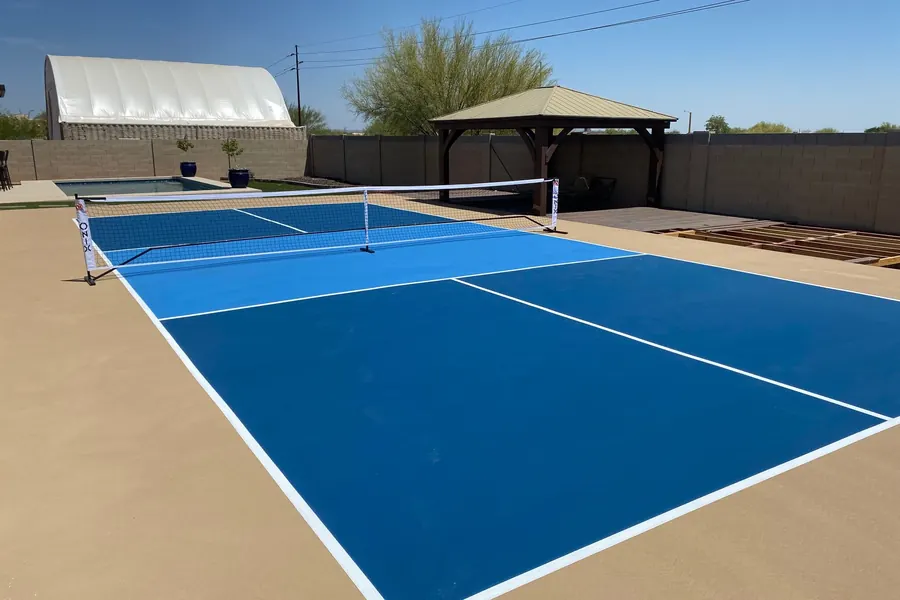
Peoria’s zoning code gives the court on a single family lot its own section, 21-315.E.2, amended in December 2024, covering tennis, pickleball, basketball and similar courts. A court stays out of the required front yard and keeps 5 feet from side and rear lot lines, or 20 feet when lit, measured from the playing surface and each light pole’s base.
The court must be fenced in vinyl netting or coated or painted chain link up to 16 feet tall, to keep tennis balls off neighboring lots, while other side and rear fences stop at 7 feet. Plans go to the Planning Department for a zoning check, with setbacks, wall, fence and light heights, and a lighting cutsheet and photometric plan.
The city’s amended building code requires a building permit for any fence over 3 feet, and the zoning code requires a permit for any fence or wall over 7 feet. Lot coverage counts only the area under a building’s roof. City Code 11-52 requires a Peoria business license of any outside business that performs services in the city, a Phoenix contractor included.
Court lights and the Dark Sky code
Backyard court lights must be off from 10 PM to sunrise. Section 21-302.F caps a residential light pole at 16 feet and wants fixtures aimed down and shielded, with the light source hidden from every neighboring lot. It also holds all lighting to the Dark Sky code, sections 20-60 to 20-67, adopted in 1998. That code requires a lighting application to Community Development even without a building permit.
Hardpan, frost line and drainage
Two soil survey points in north Peoria, one at Paloma Community Park, map to the Suncity-Cipriano complex. The USDA describes the Suncity soil’s pan as extremely hard silica and calcium carbonate cement 6 to 20 inches down, so post and light pole holes there can hit it, while City Hall sits on Laveen loam with no restrictive layer listed. The adopted residential code puts frost depth at 12 inches.
North of Deer Valley Road the city requires a Wall Permit for drainage before it approves a lot’s plot plan, unless the Engineering Director waives it in writing.
Sun City and Sun City West
Sun City and Sun City West build under Maricopa County rules, which allow a tennis court fence up to 12 feet and want a zoning clearance over 6 feet and sealed plans over 7.
Sun City’s published deed restrictions cap side and rear fences at 6 feet and say no detached or prefabricated building or structure “of any nature whatsoever” may be placed or kept on a lot, and the Sun City Home Owners Association says they outrank county ordinances. Sun City West has no single set. Read the lot’s CC&Rs before a court is drawn.
Coating in heat and cold
The makers’ sheets let acrylic coats go on only when air and surface reach 50°F and are warming, with no rain forecast. One stops work once the surface passes 140°F, and another wants 24 hours above 50°F after each coat and 28 days of cure on new concrete first. The NOAA station at Youngtown, between Peoria and Sun City, averages 115 days a year at 100°F or more, and a sunlit court runs far hotter than the air, so summer favors early morning coats. From November through March over half the nights fall to 50°F or below, so winter coats follow the forecast.
Court types and sizes
Pickleball courts
USA Pickleball lists 34 by 64 feet as the pad for a new court. Apex builds single backyard courts and HOA or club layouts on a concrete slab in acrylic color coats. More on pickleball court construction.
Tennis courts
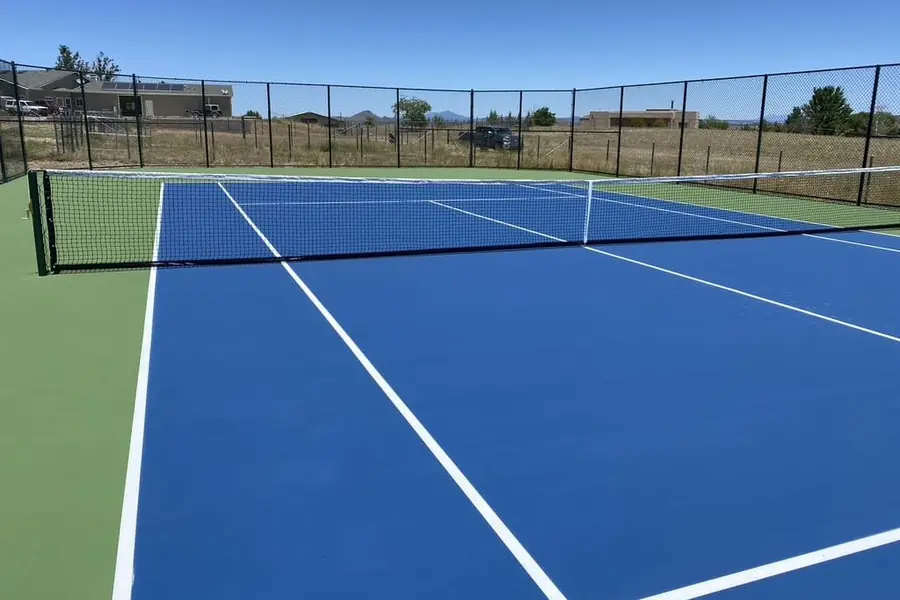
A full tennis court with run-off takes about 60 by 120 feet, and a second line color adds pickleball. More on tennis court construction.
Basketball and multi-sport courts
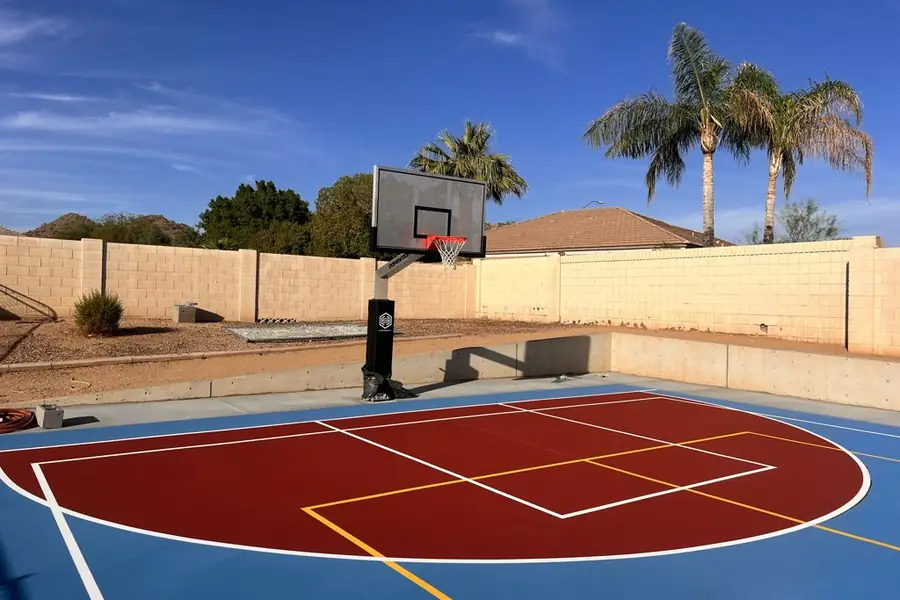
Basketball runs from a half court to a full court, and a multi-sport slab carries lines for several games. More on basketball courts and multi-sport courts.
Bocce and padel courts
Apex builds bocce and padel courts and rebuilds or resurfaces worn bocce courts after a visit. More on bocce courts and padel courts.
Court resurfacing in Peoria
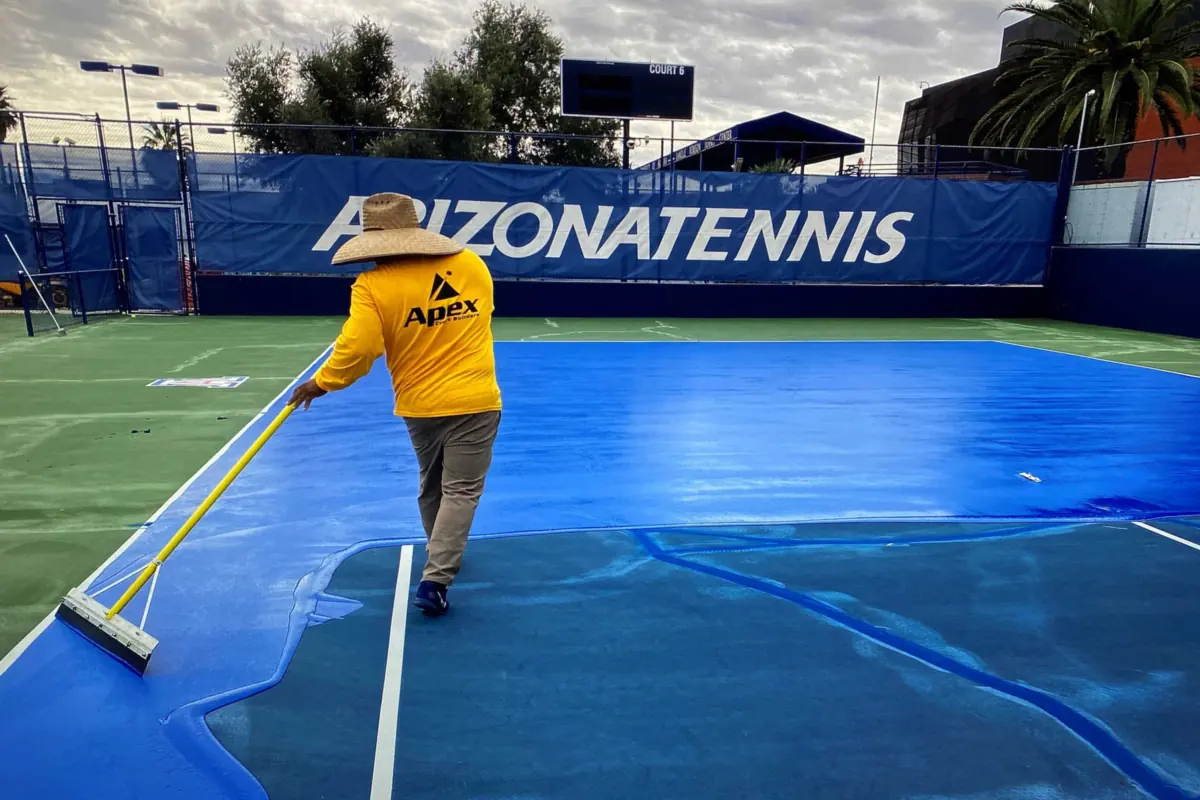
Tennis court resurfacing and pickleball court resurfacing both start with cleaning. Cracks get filled and low spots leveled, then an acrylic resurfacer goes down under the color coats and new lines for each game the court hosts. Heat and UV wear acrylic down here, fading the color and opening cracks sooner than a mild climate would, and monsoon rain works into any unfilled crack.
Backyard, HOA and club courts get the same work, and a sound tennis court converts to as many as four pickleball courts on its existing slab. More on court resurfacing and repairs.
| Services | Court construction, court resurfacing and tennis to pickleball conversions |
|---|---|
| Areas served | Peoria. Other cities are on the service area page. |
| Based in | 705 E. Granada Road, Phoenix, AZ 85006 |
| Hours | Monday to Friday, 7:00 AM to 5:00 PM Arizona time |
| Phone | (480) 264-6889 |
| License | Arizona ROC 324026, class KA Dual Engineering, held by Apex Courts Arizona LLC, licensed since 2019 |
Court questions
How late can backyard court lights stay on in Peoria?
How high can the fence around a court go?
What does the city review before a court goes in?
What does hardpan change about a court?
Is there a season for coating a court?
Can a court go on a lot in Sun City or Sun City West?
How long is the drive from Apex to Peoria?
Request a free estimate
Every court is quoted per project, and final pricing depends on court size, existing surface condition, crack repair, drainage and low spots, coating system, colors, striping and site access. Tell us where the court is going, whether you want lights and whether the lot is north of Deer Valley Road. Call (480) 264-6889 and the owner answers. The consultation is free. Or send the form below and we call you back.