
Court Installation in Gilbert, AZ
Apex Courts Arizona LLC, ROC 324026, class KA Dual Engineering, licensed since 2019, 800+ courts built across Arizona, family owned in Phoenix, ASBA member, BBB Accredited.
Apex Court Builders, a Phoenix family business, installs tennis, pickleball, basketball and multi-sport courts in Gilbert and resurfaces worn ones, for homeowners, HOAs and clubs. Apex Courts Arizona LLC holds Arizona ROC 324026, one license that covers commercial and residential work, grading and concrete included, and court lighting is on the same contract.
Call (480) 264-6889, Monday to Friday 7:00 AM to 5:00 PM Arizona time, or request a free estimate.
Setbacks and court fences
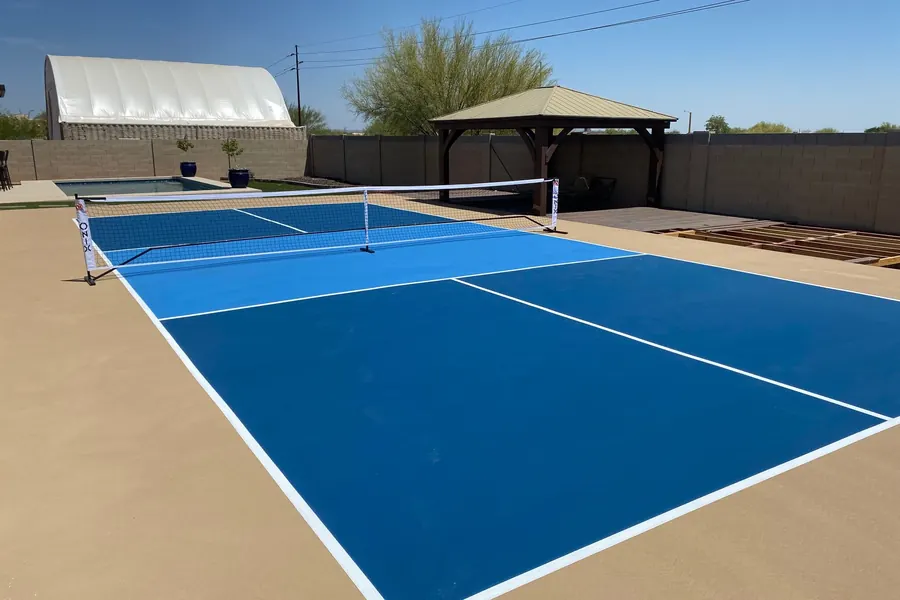
A lot inside the Town of Gilbert answers to the town’s Land Development Code. It sets a court on a residential lot at least 10 feet back from side and rear property lines. Side and rear fences in single family districts top out at 8 feet, but court fencing, chain link included, may rise to the district’s height limit inside the building envelope if fencing over 8 feet meets the setbacks for accessory structures. Planning staff can confirm how the rules fit a given lot.
On a county island, which is unincorporated land, Maricopa County’s zoning ordinance applies instead. Its rule for private courts keeps a court 20 feet from adjoining property under separate ownership and caps court fences and walls at 14 feet. Any fence or wall over 6 feet needs a building permit, so a 10-foot court fence does, and one that changes the historic flow of surface runoff needs a drainage clearance permit at any height.
Court lighting rules
On county land, Section 812 of the county zoning ordinance covers flood and spot lights for recreation areas and sets shielding and filtering by lamp type, with LED and other unlisted sources left to the zoning inspector. Court lights that do not conform must be off by 11 PM unless an event that started earlier is finishing.
Inside town limits, Gilbert’s light and glare code exempts lighting for tennis courts and similar recreational facilities from its rules if it is off by 10 PM, except to finish an event already in progress, and is shielded or designed to keep up-light, spill light and glare down.
HOA design review
Association rules can be tighter than either code. Power Ranch’s design guidelines, effective May 1, 2026, send every exterior change to its Design Review Committee before work starts, and they bar post lights in front and back yards, chain link fence material on any lot and lighting on basketball goals. As written, they would leave a court there without pole lights or chain link. Elsewhere, check the community’s CC&Rs and ask its review committee first.
Expansive soil under the slab
The USDA’s 2002 map of shrink and swell potential for greater Phoenix rates a broad area of north Gilbert High, with Moderate and Low ground farther south. Expansive soils hold clays that swell and shrink as their water changes, and the Arizona Geological Survey counts heaving and cracking of floor slabs among the damage. The map’s notes say it does not replace testing on site, and the survey recommends soil borings by a geotechnical firm. The site visit checks grade, drainage and access.
The coating calendar and the monsoon
One acrylic coating maker wants both air and surface at least 50°F and rising with no rain coming, and no coat on a surface over 140°F. The Weather Service’s Phoenix office publishes no normals for Gilbert, so the figures here are from Phoenix Sky Harbor, which averages 111 days a year at 100°F or more, from around May 2 to October 5. Sunlit pavement runs much hotter than the air, so in summer the surface cap favors early morning coats. Normal lows sit under 50°F from December through February, so another maker’s coating, which must stay above 50°F for 24 hours after it goes on, waits for a mild spell. The monsoon officially runs June 15 through September 30, with flash floods possible at any hour. A court here can be coated through most of the year, timed to those limits.
Courts Apex installs
Pickleball courts
A backyard pickleball court, or a set of courts for an HOA or club, is a concrete slab with acrylic color coats, lines and a net on permanent posts. More on pickleball court installation.
Tennis courts
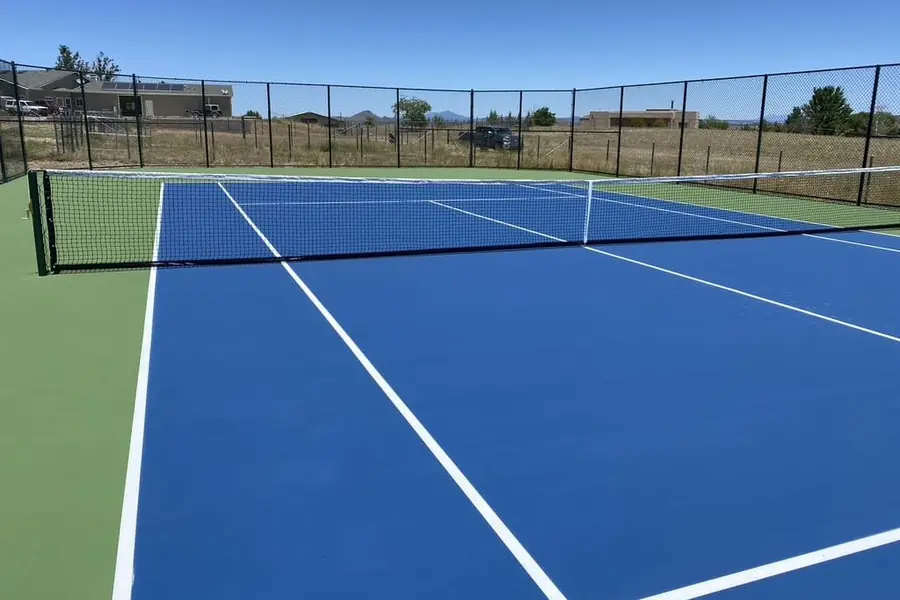
A full tennis court needs a pad about 120 feet long and 60 feet wide to fit its run-off. Pickleball lines can go on in a second color so one slab hosts both games. More on tennis court installation.
Basketball and multi-sport courts
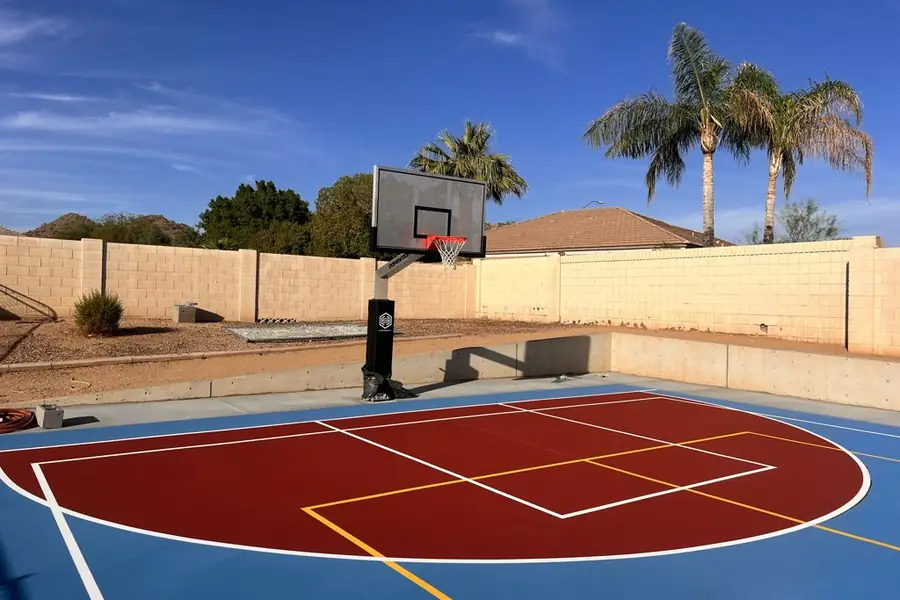
Basketball comes as a half court or a full court, and a multi-sport court carries lines for two or more games on one slab. More on basketball court installation and multi-sport courts.
Bocce and padel courts
Apex builds bocce and padel courts, and resurfaces or rebuilds worn bocce courts, quoted after a visit. More on bocce court installation and padel courts.
Court resurfacing in Gilbert
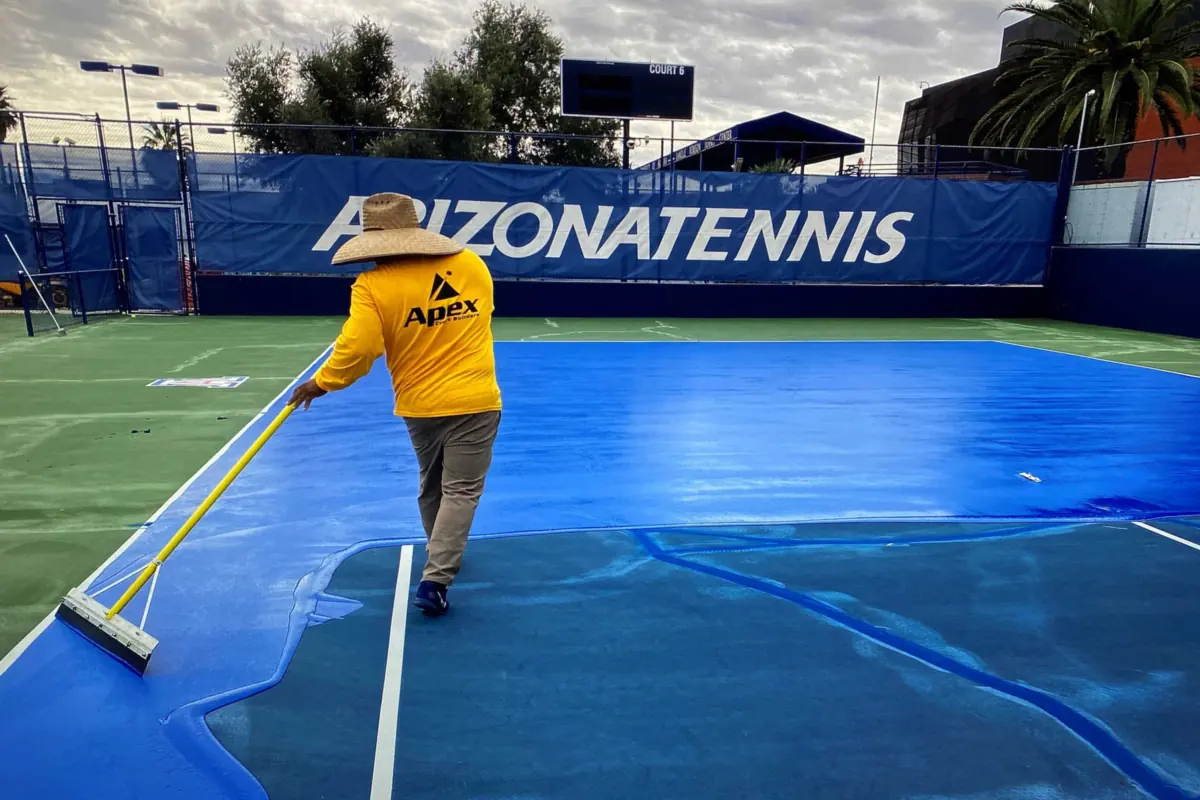
A resurface starts with cleaning, crack filling and leveling of low spots, then an acrylic resurfacer, fresh color coats and lines for each sport the court hosts. Sun and heat wear acrylic down faster here than in a milder climate, which shows as faded color and earlier cracks. Apex checks the slab before quoting, which matters where expansive soil can move it. Converting a sound tennis court leaves room for as many as four pickleball courts without pouring a new slab. More on resurfacing and repairs.
| Services | Court installation, court resurfacing and tennis to pickleball conversions |
|---|---|
| Areas served | Gilbert. Other cities are on the service area page. |
| Based in | 705 E. Granada Road, Phoenix, AZ 85006 |
| Hours | Monday to Friday, 7:00 AM to 5:00 PM Arizona time |
| Phone | (480) 264-6889 |
| License | Arizona ROC 324026, class KA Dual Engineering, held by Apex Courts Arizona LLC, licensed since 2019 |
Court questions
How far from the property line does a backyard court have to sit?
Are there limits on court lights at night?
Does a 10-foot court fence need a permit?
What does the local soil mean for a court slab?
Can a court be coated in summer or winter?
How far is the drive from Apex’s base in Phoenix?
Request a free estimate
Every court is quoted per project, and final pricing depends on court size, existing surface condition, crack repair, drainage and low spots, coating system, colors, striping and site access. Tell us where the court is going, whether you want lights, and whether the lot is in an HOA or on county land. Call (480) 264-6889 and the owner answers. The consultation is free. Or send the form below and we call you back.