Court Construction in Scottsdale, AZ
Apex Courts Arizona LLC, ROC 324026, class KA Dual Engineering, licensed since 2019, 800+ courts built across Arizona, family owned in Phoenix, ASBA member, BBB Accredited.
Scottsdale’s rule for backyard courts sets where light poles stand and when they go dark, and north and east of the CAP canal a desert overlay decides where a court can sit on the lot. Apex Court Builders, a Phoenix family business, builds and resurfaces pickleball, tennis, basketball and multi-sport courts in Scottsdale, Paradise Valley and Fountain Hills, under one license that covers commercial and residential work, grading and concrete included. Court lighting is on the same contract.
Call (480) 264-6889, Monday to Friday 7:00 AM to 5:00 PM Arizona time, or request a free estimate.
Light poles, setbacks and the 10 PM cutoff
In Scottsdale’s zoning ordinance, as amended through 2024, a backyard court stays out of the required front yard, keeps its playing surface at least 5 feet from the side and rear lot lines, and sits no more than 30 inches above the adjacent grade unless stormwater rules require more. Every court light needs shielding that hides the source from the neighbors, and one aimed toward a side or rear line needs its pole base 20 feet back. Court lights stay off from 10 PM to sunrise, and the lighting plans go to the city for review.
The city’s 2014 lighting ordinance caps recreation fixtures at 20 feet above finished grade and requires them shielded, full cutoff and aimed down, with no more than 0.1 foot candles at the property line between two homes. A 2005 city interpretation, still listed as current, lets a lit court come within 20 feet of a side or rear line if the light source stays 20 feet back.
Desert lots in the ESL overlay
The Environmentally Sensitive Lands overlay covers 134 square miles north and east of the Central Arizona Project canal. Each development there sets aside 20 to 80 percent of its land as natural open space, depending on landform, and nothing is graded or built inside an open space easement. Where that open space is on the lot, the court sits inside the lot’s approved construction envelope. The city’s 2004 ESL guide describes the upper desert’s foothill slopes as granular soil that often holds strong caliche hardpan, and hillside land as shallow soil or none over rock, so digging for a pad and its footings can meet either.
Fences, permits and HOA rules
Scottsdale requires a permit for any fence over 3 feet, and every retaining wall needs engineered plans approved by the city. The same zoning ordinance has the court fenced or enclosed to keep balls off the next lot, within its district’s height limit, which is 8 feet on a side or rear line in R1-7 and R1-43, though R1-43 allows 12 feet set 20 feet back. Whether a 10-foot court fence fits a given lot, and whether the slab needs a permit, are questions for the city’s planning staff.
Check the CC&Rs first. Desert Mountain’s architectural guidelines, amended through May 2025, allow no tennis court, no court for another sport and no basketball goal on any lot.
In Paradise Valley, hillside regulations in effect since November 2018 ban court lighting on hillside lots. On flat R-43 lots, the town’s zoning text allows tennis court lights up to 20 feet above the court, hooded and off from 10 PM to sunrise, and keeps a tennis court’s sides 32 feet and its ends 41 feet from any lot line. A tennis court’s 10-foot fence must be see-through above 6 feet on a flat lot and throughout on a hillside lot.
Courts we build
Pickleball courts
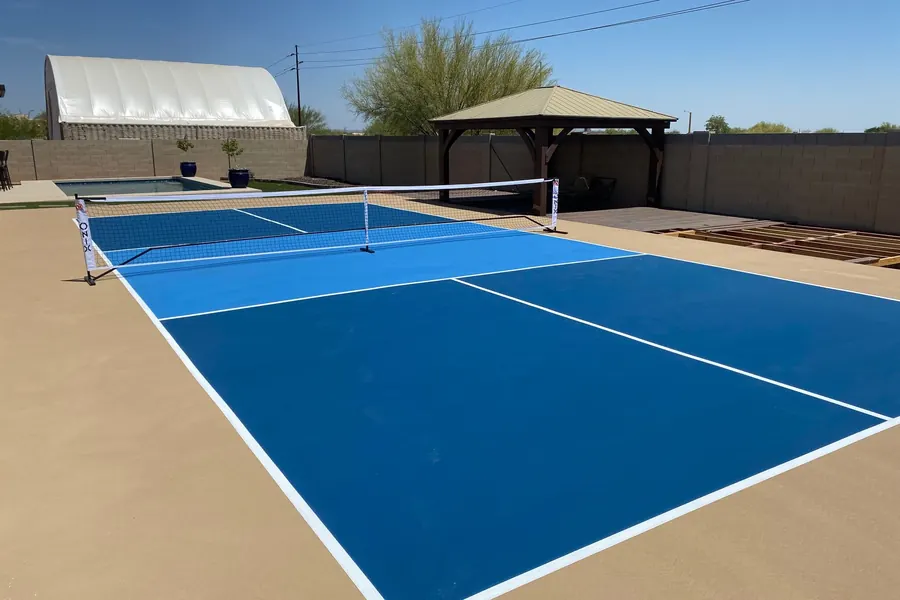
Apex is a pickleball court builder for backyard courts and multi-court layouts at HOAs and clubs, each on a concrete slab finished in acrylic color. See pickleball court construction.
Tennis courts
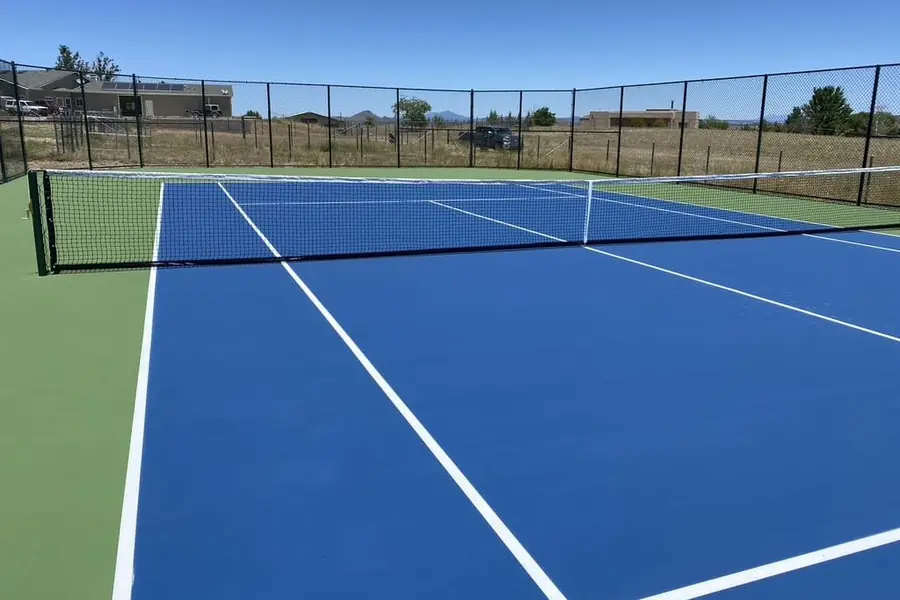
Apex builds tennis courts on the regulation footprint of about 60 by 120 feet with run-off, which on an ESL lot has to fit inside any construction envelope. Pickleball lines can go on in a second color. See tennis court construction.
Basketball and multi-sport courts
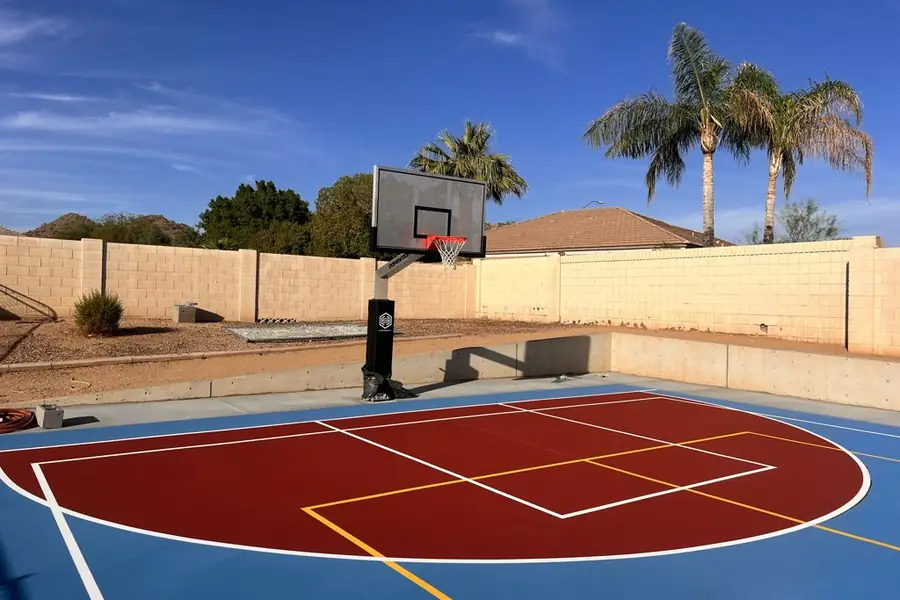
Apex builds basketball courts from a backyard half court to a full court, and multi-sport courts lined on one slab for several games. See basketball court construction and multi-sport courts.
Padel and bocce courts
Apex is also a padel court builder and builds bocce courts. A padel court sits inside its own walls and fence, so the city’s fence height question applies to it too. See padel courts and bocce courts.
Court resurfacing in Scottsdale
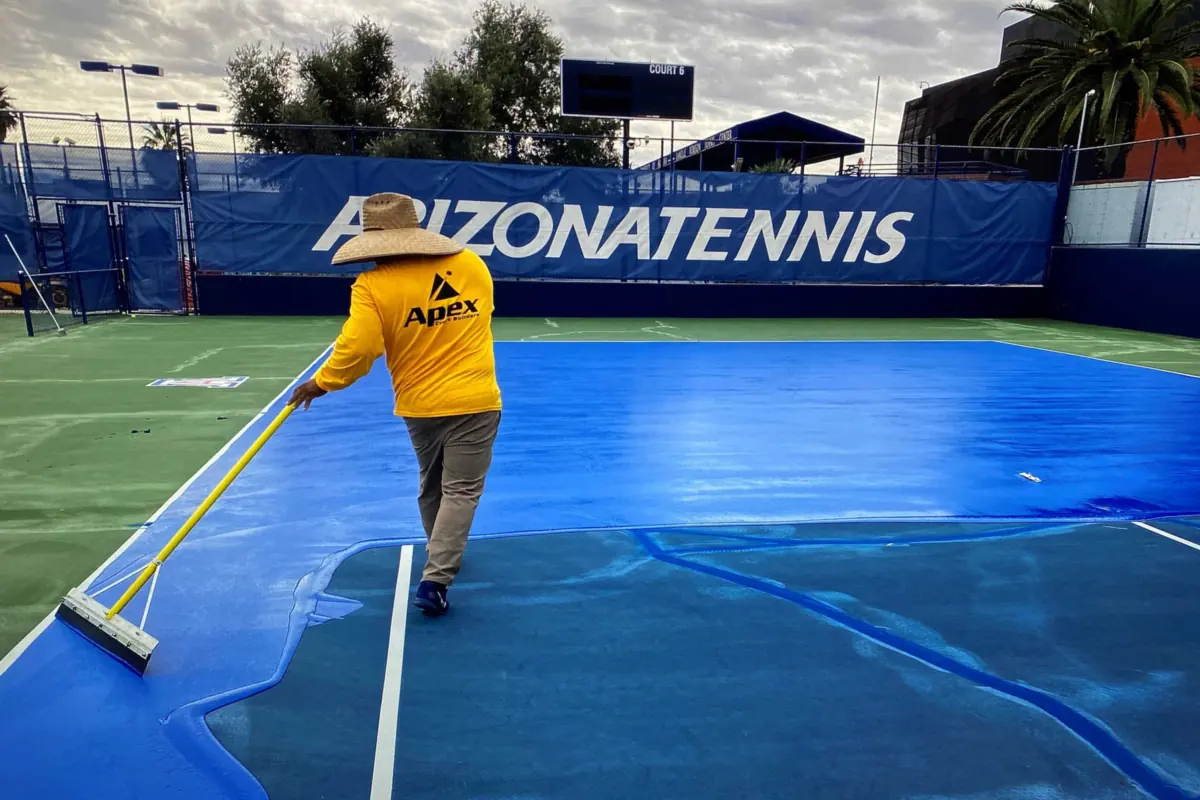
Apex resurfaces backyard, HOA and club courts for tennis, pickleball and basketball. Each resurface runs from cleaning and crack repair through leveling, an acrylic resurfacer, color coats and lines. UV and heat wear an acrylic coat down, so the color fades and the surface cracks sooner than it would in a milder climate. The Scottsdale airport averages 92.9 days a year at 100°F or above, a court surface in summer sun gets far hotter than the air, and two coating makers rule out application on a surface above 130°F or 140°F, so summer recoats favor the first hours of daylight. A sound tennis court converts to pickleball with no new slab, up to four pickleball courts on one tennis footprint. See court resurfacing and repairs.
| Services | Court construction, court resurfacing and tennis to pickleball conversions |
|---|---|
| Areas served | Scottsdale, Paradise Valley and Fountain Hills. Other cities are on the service area page. |
| Based in | 705 E. Granada Road, Phoenix, AZ 85006 |
| Hours | Monday to Friday, 7:00 AM to 5:00 PM Arizona time |
| Phone | (480) 264-6889 |
| License | Arizona ROC 324026, class KA Dual Engineering, held by Apex Courts Arizona LLC, licensed since 2019 |
Court questions
Can a backyard court in Scottsdale have lights?
How close to the property line can a court sit?
Can the court have a 10-foot fence?
What changes on a lot in the ESL overlay?
Does the HOA get a say?
When can a court be coated in Scottsdale?
How does a project start?
Request a free estimate
Every court is quoted per project, and final pricing depends on court size, existing surface condition, crack repair, drainage and low spots, coating system, colors, striping and site access. Tell us where the court is going, whether you want lights and whether the lot is in the ESL overlay. Call (480) 264-6889 and the owner answers. The consultation is free. Or send the form below and we call you back.