
Why Do Acrylic Court Surfaces Fade and Soften in the Sun?
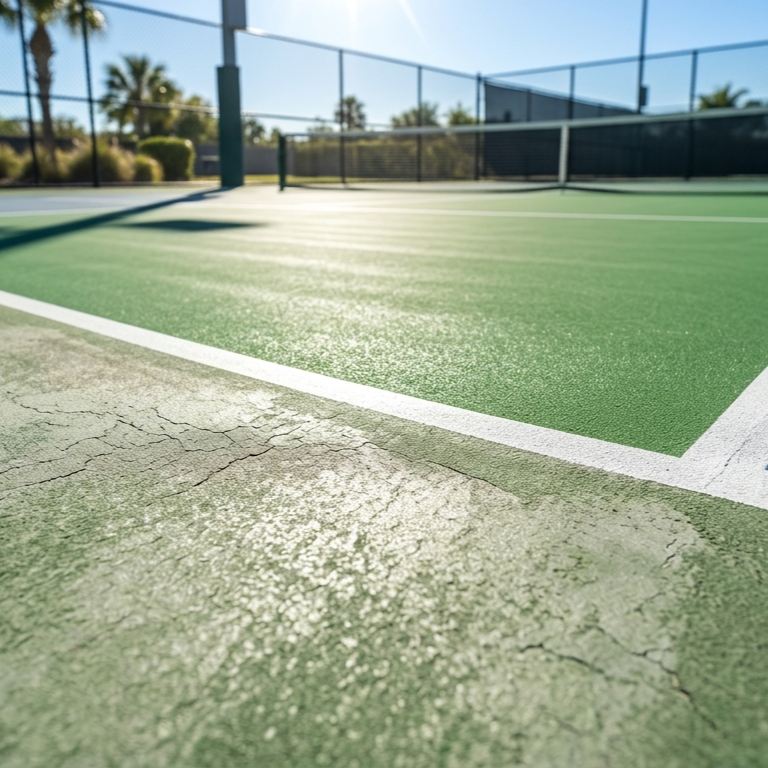
Quick Answer: Acrylic court surfaces fade because ultraviolet light breaks down the pigments and the coating over time, washing out the once-vivid color. The same intense sun heats the surface, and extreme, sustained heat can stress the acrylic coating, contributing to wear and surface breakdown. So fading is mainly a UV effect on the color, while heat stresses the coating's durability. In a harsh-sun climate, both happen faster, which is why courts there fade and wear sooner and need more frequent resurfacing. You can slow it with quality materials and proper installation, good maintenance, and resurfacing on schedule — but some fading is inevitable under relentless sun.
If your once-vibrant court has faded to a duller version of its former self, or the surface seems to be wearing faster than you expected, the sun is the culprit. Acrylic court surfaces are durable, but intense UV and heat take a toll over time. Understanding how the sun causes fading and surface breakdown helps you slow it and know what to expect in a hot climate.
How UV Causes Fading
The fading comes down to ultraviolet (UV) radiation in sunlight. An acrylic court surface gets its color from pigments in the coating, and UV light gradually breaks down those pigments and the coating itself. As the sun's rays work on the surface day after day, the color degrades and washes out, so the bright, saturated court color fades to a duller, lighter shade over time. This is the same process that fades many materials left in the sun — UV is hard on color. The more intense and constant the sun exposure, the faster the fading, which is why courts in high-UV climates lose their vivid color sooner than those in milder regions or with some shade.
How Heat Stresses the Surface
Alongside the UV fading, the intense sun heats the court surface significantly. An outdoor court in direct sun can get extremely hot, and that sustained, extreme heat stresses the acrylic coating. While the coating is built to handle outdoor conditions, relentless extreme heat contributes to the gradual breakdown and wear of the surface over time, working alongside UV and use. So heat is a contributing stress on the coating's durability, even as UV is the primary driver of the color fading specifically. Together, the intense sun's two effects — fading from UV and stress from heat — accelerate how quickly a court surface ages in a harsh climate.
| Factor | Effect on the surface |
|---|---|
| UV light | Breaks down pigments; fades color |
| Extreme heat | Stresses coating; contributes to wear |
| Combined sun exposure | Faster fading and breakdown |
| Heavy use | Wears texture and coating |
| Poor maintenance | Lets wear and damage accelerate |
Why Harsh-Sun Climates Wear Faster
Put UV and heat together in a climate of intense, all-day sun and extreme temperatures, and acrylic court surfaces simply wear and fade faster than they would elsewhere. The relentless exposure means the pigments break down sooner, and the coating endures more thermal stress, so the surface reaches the point of needing resurfacing more quickly. This is normal and expected for outdoor courts in harsh-sun regions — it's not a defect, but a consequence of the environment. Knowing this helps set realistic expectations: a court in extreme heat and UV will need more frequent attention than the same court in a mild climate.
How to Slow the Fading and Wear
While you can't stop the sun, several things slow the fading and surface breakdown. Quality materials and proper installation make a real difference — well-made acrylic coatings with good pigments and UV resistance, applied correctly over a sound base, hold up better against the sun than lower-quality or poorly applied surfaces. Good maintenance helps too: keeping the court clean of dirt and debris, and addressing minor issues before they worsen, slows the overall wear. And resurfacing on a sensible schedule renews the faded, worn coating before it degrades further, restoring color and protecting the base. In a hot climate, these steps don't prevent fading entirely, but they meaningfully extend how good the surface looks and how long it lasts between resurfacings.
Choosing quality materials and proper installation up front pays off most in a harsh-sun climate, because that's where surfaces are tested hardest. A well-made, properly applied acrylic surface resists UV fading and heat stress better and stays looking good longer than a budget surface that fades and breaks down fast under intense sun.
What to Expect and When to Act
Some fading is inevitable under relentless sun — even a quality surface will gradually lose color over years of intense UV. The goal isn't to prevent fading entirely but to slow it and to renew the surface before it degrades too far. When the color has noticeably faded, the texture is wearing, or the surface is showing its age, resurfacing renews the acrylic coating, restoring the look and the protection over the base. Acting before the coating wears through to the base is important, since the coating protects what's underneath. A court professional can assess your surface's condition and advise when it's time to resurface, keeping your court vibrant and well-protected despite the harsh sun.
Frequently Asked Questions
Because ultraviolet light breaks down the pigments and coating that give the surface its color. As the sun's UV rays work on the court day after day, the color degrades and washes out, fading the once-vivid surface to a duller shade. UV is the primary cause of the color fading, and the more intense the sun exposure, the faster it happens.
Intense, sustained heat stresses the acrylic coating, contributing to its gradual breakdown and wear over time, working alongside UV exposure and use. While the coating is built for outdoor conditions, relentless extreme heat adds stress to its durability. So heat contributes to surface wear, even though UV is the main driver of color fading.
Because intense, all-day UV and extreme heat together accelerate both fading and surface breakdown. The pigments break down sooner under strong UV, and the coating endures more thermal stress in extreme heat, so the surface reaches the point of needing resurfacing more quickly than in a mild climate. It's a normal consequence of the harsh sun environment, not a defect.
You can't stop fading entirely under the relentless sun, but you can slow it. Quality materials and proper installation with UV-resistant coatings, good maintenance like regular cleaning, and resurfacing on schedule all extend how long the surface looks good. Some fading is inevitable in intense sun, so the goal is to slow it and renew the surface before it degrades too far.
It tends to hold up better. Well-made acrylic coatings with good pigments and UV resistance, applied correctly over a sound base, resist fading and heat stress better than lower-quality or poorly applied surfaces. In a harsh-sun climate, where surfaces are tested hardest, investing in quality materials and proper installation pays off with a surface that looks good longer between resurfacings.
When the color has noticeably faded, the texture is wearing, or the surface is clearly showing its age — and importantly, before the coating wears through to expose the base. Resurfacing renews the acrylic coating, restoring the look and the protection. A court professional can assess your surface and advise when it's due, which in a hot climate tends to come sooner than in milder regions.
The Sun Fades and Stresses — Quality and Care Slow It
Acrylic court surfaces fade because UV breaks down their pigments, and the intense heat stresses the coating, so in a harsh-sun climate, both happen faster, and the surface wears sooner. You can't stop the sun, but quality materials, proper installation, good maintenance, and resurfacing on schedule meaningfully slow the fading and protect the base. Some fading is inevitable under relentless sun — the key is renewing the surface before it degrades too fa.
Court color fading or surface wearing in the desert sun? — Get it assessed and resurfaced with quality materials built for the heat. Apex Court Builders serves Phoenix and across Arizona. Call (480) 264-6889.
