
How Long Does an Acrylic Court Surface Last in Extreme Heat?
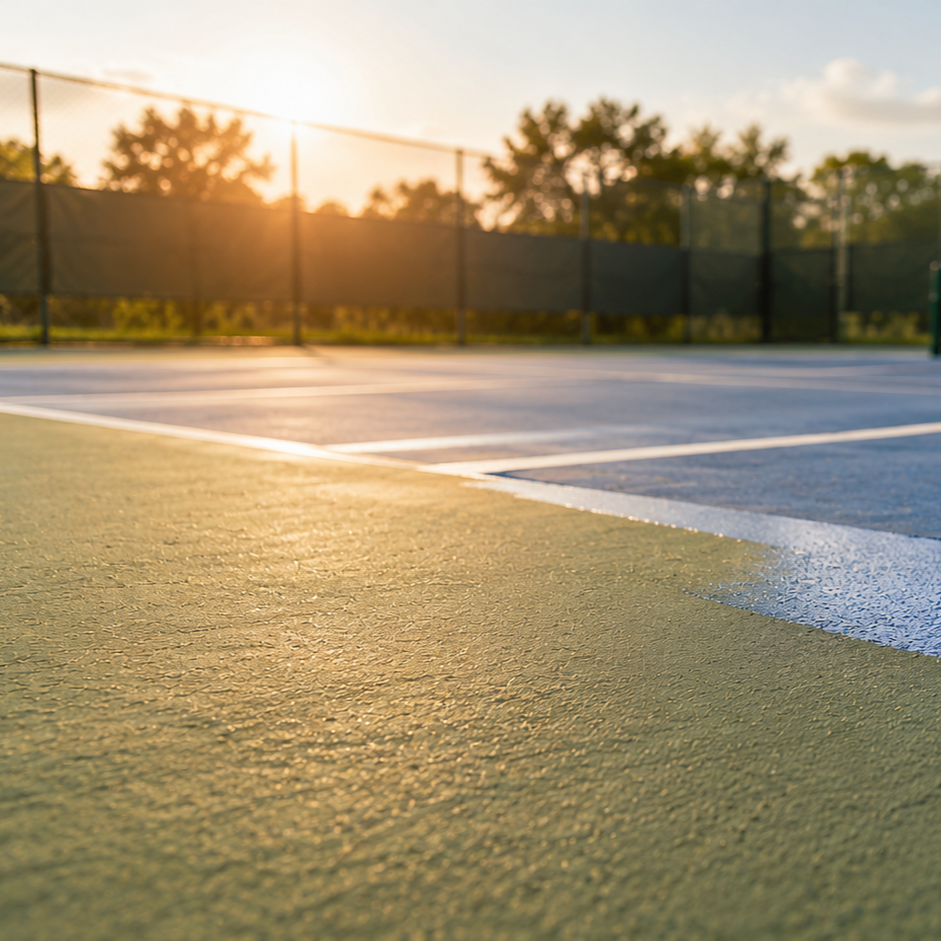
Quick Answer: An acrylic court surface typically needs resurfacing every several years — often in the range of roughly 4 to 8 years — but in extreme heat and intense UV, it tends toward the shorter end of that range. The acrylic coating is a wear layer over the base, and constant sun, heat, and use gradually fade, wear, and break it down. What's important to understand is that resurfacing renews the acrylic coating, not the whole court — a sound base can be recoated many times over decades. Factors like sun exposure, usage, maintenance, and the quality of the original installation all affect how often resurfacing is needed.
If you have an outdoor acrylic court in a hot, sunny climate, a natural question is how long the surface will last before it needs attention. The honest answer is that the acrylic coating is a wear layer with a finite life, and intense heat and UV shorten it. Understanding the typical lifespan and what resurfacing renews helps you plan for keeping your court in good shape.
The Acrylic Surface Is a Wear Layer
The first thing to understand is what the acrylic surface is. An acrylic court is built on a base — typically concrete or asphalt — with the acrylic coating system applied on top. That coating provides the color, the texture, the playing characteristics, and a protective layer over the base. Like any coating exposed to the elements and constant use, it wears over time and is designed to be renewed periodically through resurfacing. So when we talk about how long an acrylic court "lasts," we're really talking about how long the coating lasts before it needs to be recoated — not the life of the entire court.
The Typical Resurfacing Interval
Acrylic court surfaces generally need resurfacing every several years to keep them in good playing condition and appearance. A common range is roughly every 4 to 8 years, though the exact interval varies with conditions. In a climate of extreme heat and intense UV, the surface tends to wear and fade faster, pushing toward the shorter end of that range. The relentless sun and heat are simply harder on the coating than a mild climate, so courts in harsh-sun regions often need more frequent resurfacing than the same court would elsewhere.
| Factor | Shortens surface life | Extends surface life |
|---|---|---|
| Sun/UV exposure | Intense, all-day sun | Some shade, milder climate |
| Heat | Extreme heat | Moderate temperatures |
| Usage | Heavy, frequent play | Light use |
| Maintenance | Neglected | Regular cleaning and care |
| Installation quality | Poor base/application | Quality base and coating |
What Wears the Surface Out
Several factors drive how fast an acrylic surface degrades, and in a hot climate, they stack up. Intense UV fades the color and breaks down the coating over time. Extreme heat stresses the surface. Heavy use wears the texture and coating through foot traffic and play. And lack of maintenance lets dirt, debris, and minor damage accelerate wear. The quality of the original installation matters too — a properly prepared base and well-applied coating hold up better than a poor one. In an extreme-heat, high-UV environment, the sun and heat factors are especially significant, which is why these courts trend toward more frequent resurfacing.
Resurfacing Renews the Coating, Not the Whole Court
Here's the reassuring part: resurfacing renews the acrylic coating, not the entire court. As long as the base beneath is sound, the acrylic surface can be recoated repeatedly over the court's life. So resurfacing every several years isn't replacing the court — it's refreshing the wear layer on top, restoring the color, texture, and protection. A well-built court with a sound base can be resurfaced many times across decades of use. This is why thinking of the acrylic surface as a renewable wear layer is the right mental model: the base is the long-term investment, and the coating is the maintainable surface that gets periodically renewed.
Plan for resurfacing as routine, expected maintenance rather than a surprise repair, especially in a harsh-sun climate where it comes due sooner. Budgeting for periodic resurfacing keeps the court looking and playing its best, and addressing the surface on schedule protects the base underneath from exposure as the coating wears thin.
Why Timely Resurfacing Matters
Staying on top of resurfacing does more than keep the court looking good. The acrylic coating protects the base, so letting it wear too far can expose the base to the elements and to potential damage, which is a bigger problem than refreshing the surface. A worn surface also affects playability — faded color, worn texture, and a less consistent playing surface. Resurfacing on a sensible interval keeps the court safe, attractive, and playing well, while protecting the base investment underneath. Because the right timing depends on your court's conditions, usage, and surface condition, a court professional can assess when resurfacing is due and keep your court on a schedule that suits a hot, high-UV climate. Staying ahead of it is almost always easier and cheaper than catching up after the surface has worn too far.
Frequently Asked Questions
The acrylic coating generally needs resurfacing every several years — commonly in the range of about 4 to 8 years — to stay in good condition. In extreme heat and intense UV, it tends toward the shorter end, since harsh sun wears and fades the surface faster. Importantly, this is the life of the coating, not the whole court; the surface is renewed through resurfacing.
Yes. Intense heat and UV are harder on the acrylic coating than a mild climate, fading the color and breaking down the surface faster. Courts in harsh-sun regions often need more frequent resurfacing than the same court would elsewhere. The sun and heat are significant factors in how quickly the surface wears, pushing resurfacing intervals toward the shorter end.
Resurfacing renews the acrylic coating on top of the court — refreshing the color, texture, and protective layer that wears over time. It doesn't replace the entire court. As long as the base beneath is sound, the surface can be recoated repeatedly over the years. It's the routine maintenance that keeps an acrylic court looking and playing its best.
More often than in a mild climate, generally toward the shorter end of the typical range, because extreme heat and UV wear the surface faster. The exact interval depends on your sun exposure, how much the court is used, the maintenance it gets, and the quality of the original installation. A court professional can assess your specific court to determine when resurfacing is due.
No. Resurfacing renews only the acrylic coating, the wear layer on top, not the base or the entire court. A sound base can be recoated many times over decades. So periodic resurfacing is refreshing the surface, not rebuilding the court. The base is the long-term investment, and the coating is the maintainable layer that gets renewed on a schedule.
Because the acrylic coating protects the base. Letting the surface wear too far can expose the base to the elements and potential damage, which is a bigger problem than refreshing the coating. A worn surface also affects playability with faded color and worn texture. Timely resurfacing keeps the court safe, attractive, and playing well while protecting the base underneath.
Plan for the Surface, Protect the Base
An acrylic court surface lasts several years between resurfacings — often toward the shorter end of the range in extreme heat and UV, since harsh sun wears it faster. The key insight is that resurfacing renews the coating, not the whole court, so a sound base can be recoated for decades. Treating resurfacing as routine maintenance keeps your court looking and playing its best while protecting the base investment underneath.
Wondering when your court is due for resurfacing in the desert sun? — Get its condition assessed and a maintenance plan for the heat. Apex Court Builders serves Phoenix and across Arizona. Call (480) 264-6889.
